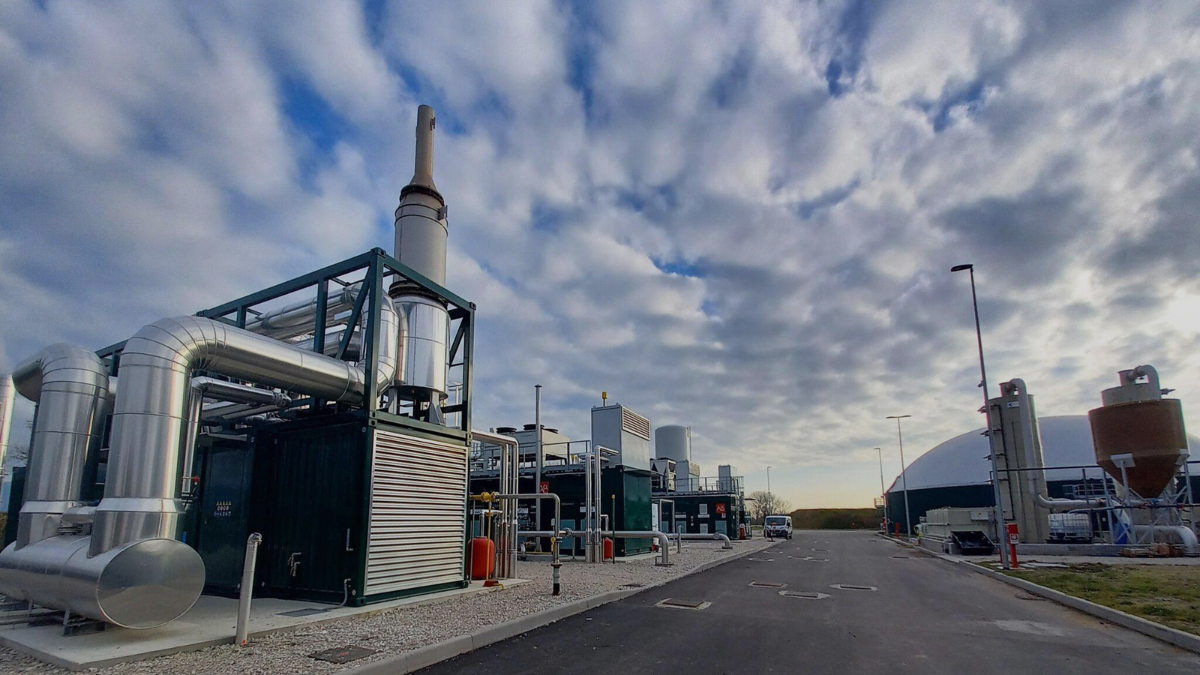
MOL Group has inaugurated its first biomethane plant in Szarvas, southeastern Hungary, following an investment of more than €7.4 million. The facility will produce more than 7 million cubic metres of biomethane annually, replacing an equivalent volume of fossil natural gas.
The plant upgrades biogas produced at MOL Group’s existing Szarvas facility into biomethane with sufficient purity for injection into the natural gas network. Its annual output is equivalent to the gas demand of around 8,500 average households.
MOL acquired the biogas plant in 2023. The facility processes more than 40,000 tonnes of waste annually from the regional meat industry, alongside 53,000 tonnes of residual materials, including slurry and turkey manure, and approximately 18,000 tonnes of agricultural feedstock.
The biomethane production technology was supplied by Italy-based Gruppo AB.
Previously, the Szarvas facility used 11–12 million cubic metres of biogas annually in combined heat and power generation, producing nearly 24 GWh of renewable electricity alongside heat.
The upgrade adds another route to market by converting biogas into biomethane that can be injected into the existing gas network. The fuel can also be used in transport as bioCNG or bioLNG, including for buses and heavy-duty vehicles.
According to MOL Group, biomethane can also command additional value through sustainability certification, including the International Sustainability and Carbon Certification (ISCC) system.
The Szarvas facility is part of MOL Group’s broader Shape Tomorrow strategy, which aims to expand its green energy portfolio and strengthen regional energy security.
The company is also investing in solar power, green hydrogen and battery storage, with activities spanning Hungary and Croatia through businesses including INA and Alteo.
The new plant is the third biomethane facility in Hungary and gives MOL its first project of this kind.
Central and Eastern Europe has several conditions that could support biomethane development: agricultural waste streams, established gas infrastructure and demand from industry and transport.
The EU’s REPowerEU framework set a target of producing 35 billion cubic metres of biomethane annually by 2030, partly to reduce dependence on imported fossil gas. European biomethane production capacity reached 8.2 billion cubic metres by mid-June 2026, according to the source report.
Szarvas demonstrates how existing biogas facilities can be upgraded to supply renewable gas without requiring an entirely new distribution network. Scaling this model will depend on feedstock availability, project economics, access to gas infrastructure and policies that support biomethane investment.
For the region, the opportunity is to turn agricultural and industrial waste into a domestic energy resource while diversifying supply beyond conventional natural gas.